Tuesday, November 30, 2010

What was it that Mark Twain said about being dead?

Sigh. I found this article, "Anthropology without Science," a bit overheated and under-informing, for the reasons that Hugh Gusterson (a cultural anthropologist on the AAA's executive board) writes in a comment to this posting:

I notice that the article does not tell the readers what the new wording is and how it differs from the old wording. (What sort of journalism is that?) Maybe we could dial down the temperature a little if people saw the two sets of wording. The old wording said "The purposes of the Association shall be to advance anthropology as the science that studies humankind in all its aspects, through archeological, biological, ethnological, and linguistic research; and to further the professional interests of American anthropologists; including the dissemination of anthropological knowledge and its use to solve human problems." The new wording says, "The purposes of the Association shall be to advance public understanding of humankind in all its aspects. This includes, but is not limited to, archaeological, biological, social, cultural, economic, political, historical, medical, visual, and linguistic anthropological research."


I grow weary of that old chestnut about science being thrown under the bus of post-modernism. Reading the old versus the new wording, I think the change in orientation seems to be from promoting anthropology-as-a-science (i.e., discipline building, professionalizing, and claiming authoritative knowledge) to promoting the science itself - that is, the research and knowledge itself. It is about anthropologists as a group needing to communicate better what we do and how we think in terms that can be apprehended more easily as relevant to broader publics.

Which I think ought to start with the publics within the discipline. Frankly, I think the subfields are not only not particularly good at communicating with the oft-cited man / woman on the street, but they are pretty bad at communicating with each other. Obviously, there are individuals who are exceptions - primatologist Sarah Blaffer Hrdy's work on allomothering is read not only widely across anthropology, but also in other disciplines.

In general, however, archaeologists seem really to write and talk only to each other, and cultural anthropologists the same.

Frankly, I am a little tired of that other old chestnut that the four fields are drifting further apart and the discipline has no direction and so on. I mean, there is disarray also in economics, which as a science really ought to be feeling dismal right now...

Also, I think we ought to give more attention to where we can see communication and collaboration across the four fields - for example, on themes like water, climate change, extinction, and species. In fact, I went to an esp. interesting "experimental" panel (or "innovent") on multispecies called "Swarm." It featured anthros from the four fields, plus coordinated exhibits at art galleries, which engage yet another public. I missed them, but read more at Savage Minds.

'Nuff said :)

College degree - or pedigree?

Today's Room for Debate in the NYT is worth reading - the discussion is on "Does It Matter Where You Go to College?"

Personally, I go back and forth on this issue - I think b/c the question itself is not that straightforward.

Does it matter? No, in the sense that it matters more "what you do," both in your time in school and afterward. Also, no in that graduate school might "matter" more. Not to mention that students will find good teachers almost anywhere.

However. Yes, in the sense that where you go to college can put you into contact with professors and probably even more significantly peers who will affect your own performance or "what you do" at school. Also, where you go to college and as a result, who you know, become important and meaningful forms of cultural and social capital.

Yes, in the sense also that, as one of the bloggers at Room for Debate also notes:

If you attend a highly selective college, the per pupil expenditure is $92,000, compared with just $12,000 at the least selective colleges. The richest colleges require students on average to pay just 20 percent of the total cost of college, compared with 78 percent at the least wealthy colleges.


I think another reason why I go back and forth on this issue is that I personally feel that I have gained, both materially and immaterially, from attending an elite institution - but that cannot justify the unfairness and inequity of the structure as it stands. Or as another blogger at Room for Debate succinctly states the problem:

Elite colleges are economically and personally productive for individuals lucky enough to attend them. The real issue is what this means for those who do not attend, and for the promise of upward mobility in our society as a whole.

It is not that the elite colleges don’t work. It is that they work too well as passive agents for the intergenerational reproduction of elites.


In these times, I think there is a serious problem of misapprehending the conditions that produce an individual's access and ability to attend an elite institution as that individual's merit. "Lucky enough" glosses over the so-called accident of birth intersecting with contrived particularities: I happened to be born in the United States as a result of my parents meeting during the medical residencies in New York City, following changes in American immigration law that themselves resulted from a "shortage" of doctors and nurses. I was raised in a so-called upper-middle-class suburb with "good" public schools where teachers and guidance counselors were familiar with the college application process, and took an interest in me - and so on.

When I think about what hopes I have for Beanie and Bubbie - I hope they will be as "lucky" as I have been. Which means not necessarily that I wish for them to attend elite institutions themselves, but that the promise of living lives of significance will remain in reach. For everyone.

Monday, November 29, 2010

Phenotypical markers


I distinctly remember the day that I was taught that the "peach" crayon was the one for "skin color." It was during a summer day camp that the municipal parks and recreation department ran. There was a cluster of 2nd grade girls sitting around, drawing and coloring, and one of the girls started scrounging through the bucket of crayons, looking for "peach."

When I asked to borrow it, she looked at me and said no - because it was not my skin color.

"Peach" became "white," but apparently, there was no good way to color "yellow" or "red" or "black."

So, on the one hand, I like the idea behind Crayola's "multicultural" markers, crayons, and colored pencils.

On the other hand, I find the "multicultural" label a bit misleading. As StraightMan just said, talking over his shoulder at me: "Phenotypical, not multicultural."

***

BTW, it is moments like this - when he can say exactly what it is that I am thinking without me knowing how to put it into words - that remind me why I have been married to StraightMan for 14 years (as of tomorrow).

Thursday, November 25, 2010

Curtains for anthropology?

Colleagues in my department circulated two articles reporting on the annual meetings of the American Anthropological Association (AAA). In particular, the reports focused on the bleakness of the present and future state of anthropology – which made me wonder whether or not StraightMan and I had attended the AAA in an alternative reality. Tis true that the job market has reached the depths of suckitude. Yet, the amount of engagement seems as high as ever. At the same time, anthropologists seem to be taking to heart the notion that they ought to demonstrating and communicating the relevance of what we do.

The Chronicle of Higher Education reported primarily on that old chestnut in American anthropology: The four fields of anthropology (archaeology, biological anthropology, cultural anthropology, and linguistic anthropology) are so divided that it is threatening the discipline. Presented as Exhibit A of the embattled and embittering state of anthropology: A session featuring graduate students (which no doubt contributes to the sense of embattlement and embitterment…) commenting on the intensity of specialization within the subfields, i.e., how and why archaeologists and linguistic anthropologists cannot understand each other’s jargon.

Inside Higher Ed reported:

It is no secret that these are hard times for anthropology. The discipline claims little more than one-half of 1 percent of undergraduate degrees conferred, according to the National Center for Education Statistics. Anthropology departments across the country have been rebranded or threatened with being merged or scrapped; jobs have been targeted.


Hard times for anthropology? As far as I know, the number of undergraduate degrees in anthropology is itself not in decline. Combined departments of anthropology and sociology have been more the rule than the exception at colleges and universities. Unfortunately, it is not only anthropology programs and positions being scrapped or targeted, but to cite the particular example of the University at Albany, classics, foreign languages, and theater. It is not only hard times for anthropology, but in fact, hard times for the liberal arts and for anything that smacks of any intellectual life.

Wednesday, November 24, 2010

Day at the Museum


StraightMan and I are visiting my family in northern NJ. We had parked Beanie and Bubbie with my parents for a few days while we attending the annual meetings of the American Anthropological Association in New Orleans.

I know: How lucky are we?!

When we arrived at my parents’ home on Sunday evening, the kids were waiting for us. We have not parted company from them since. I know: How lucky are we.

StraightMan and I, not wanting to wear out our (or especially our kids’) welcome, whisked our family of four into the city for a morning at the American Museum of Natural History. My sister, who lives and works in the city, joined us.

“It’s kind of funny to go to the Museum of Natural History with two anthropologists and their kids,” she remarked to me.

To which I might have said: It’s kind of funny for two anthropologists to go to the AMNH with their kids who have watched “Night at the Museum.” When I say “funny,” I mean not funny-haha, but funny-strange. Or more like funny-mortifying.

“Gum-Gum,” Bubbie declares, his treble pitch bouncing around the august halls of the museum. “I want to see Gum-Gum.”

“Is it Gum-Gum,” Beanie asks at similar volume, then lowers her voice, “or is it Dum-Dum?” She lowers her voice because “Dum-Dum” is like saying “stupid,” which in our family, we have tried to teach our children that we do not use this word to describe people. So, Beanie, being a rather kind kid (also, a goody-goody), feels a bit wary about saying “Dum-Dum.” Especially in front of her parents.

We found Dum-Dum in the Hall of Pacific Peoples. Bubbie had a 10-minute conversation with him. No exaggeration.

It turns out that a lot of kids in the ages 3 and up set have seen the movie - and are taking their parents on a "Night at the Museum" tour.

Other highlights from our “Night at the Museum” tour: Saying hello to Theodore Roosevelt, who is neither made of wax nor of Robin Williams, as in the movie. Seeing the dinosaur that in the movie played fetch in the atrium. Looking for the lions among the African mammals.

However, we did not find Sacajawea or dioramas of the Roman Empire and Manifest Destiny that features miniature likenesses of Owen Wilson – or as Bubbie put it, “little people who talk.”

Beanie, who has a keen interest in non-human primates, was looking for Dexter, the capuchin monkey in the movie who caused such havoc for Ben Stiller.

While viewing the stuffed chimpanzees and gorillas, Beanie asked: “Are they real?” So, I explained that back when the museum had been founded, it had been thought acceptable to hunt “exotic” animals, including monkeys and apes. As we walked through the Hall of Primates, Beanie remarked: “It makes me sad to see that the gorillas had to be dead to be in the museum.”

***

This brings me to the unease that I feel - and that anthropologists today generally feel - about a place like the American Museum of Natural History. For me, the museum is arguably more interesting as an example of the history of science than as a source of "science" itself. It is a place full of relics, but it is itself also a relic of practices and ideas of science in the past.

Yet, if the number of school buses pulling off Central Park West is any indication, the American Museum of Natural History is as popular a destination as ever as a source of "science" for the public. However, it also makes me wonder (or worry) about the state of science education today.

On the one hand, the museum can inspire in kids on a school field trip an interest in anthropology, paleontology, and astronomy. On other hand, how do parents and teachers follow up on a kid's interest, once sparked?

There seems to me a widening gap between what the specialists study (and discuss among themselves in venues like the annual meetings of the American Anthropological Association) and what the public learns.

It is not necessarily that the museum provides incorrect information, but I think it is incomplete.

In order for exhibits like the Hall of African Mammals or the Hall of Primates to make sense, there ought to be more contextualization offered: The museum might offer commentary on the museum itself. Like the fact that the "exotic" animals were hunted, stuffed, and donated to the museum. Explaining this past makes the exhibit more, not less valid as an instrument for science education.

Also, I think anthropologists have a stake in a Day at the Museum: Franz Boas, regarded as the "father" of American anthropology, and Margaret Mead, his student and the most famous anthropologist in her time, both served as curators at the museum, so it is a significant site in the production of anthropological knowledge. In fact, there is a rather interesting exhibit on Margaret Mead's career at AMNH in the Hall of Pacific Peoples. It is rather striking that the exhibit includes color photographs of "change" occurring in Melanesia and Polynesia, like a man in "native" dress standing at a fast-food counter. There is otherwise little room in the museum to acknowledge what it means to be, say, Pacific Peoples today. The exhibit is situated, literally, in a passage that leads to the Hall of Pacific Peoples, which I think demonstrates how the architecture of the museum itself can be used to retell the story of the museum and its exhibits.

I think the history of science requires more attention in the American Museum of Natural History, in part because it is part of our cultural history and in part to demystify science as a process not just of discovery, but of revelation that is painstakingly derived, sometimes through reinterpretation.

Tuesday, November 23, 2010

Why we all need recess!


Here is another instance of our conventional wisdom being proved to be quite wise: All work and no play makes us unhappy, unhealthy, and ultimately, unproductive.

Jane Brody in today's Personal Health column in the NYT reports on the benefits of what public health professor Tori Yancey calls “Instant Recess — the title of her new book (University of California Press), in which she demonstrates the value of two 10-minute breaks of enjoyable communal activity as part of people’s everyday lives."

I cheer anytime anyone says that I need not exercise in swaths of time that I simply do not have. Not only that, I actually kind of hate exercise. There. I said it.

Yet, since June 2009, I have stuck to an almost-daily routine of what I call micro-running, which involves dropping off one child (or occasionally, two children) at child-care, school, or summer camp, then running a short "loop" back home. It used to take about 10 minutes to run the loop, but I have surprised myself with how much easier the hills seem to take. Rather than making the loop longer, I have been challenging myself by picking up the pace.

I look forward to microruns as a way to clear my mind and ready myself for work. However, I readily admit to enjoying other benefits of exercise: Ah, vanity. I am now down to my pre-childbearing weight - not just pre-Bubbie, but pre-Beanie.

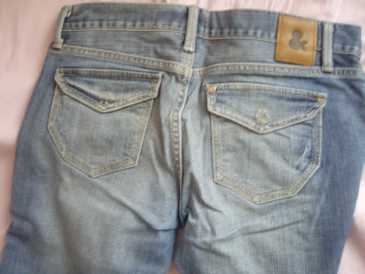
Re-finding my shape occasioned a visit to H&M yesterday after my sister remarked on the pre-Beanie jeans that I was wearing: "Wow, those are old." Referring not so much to their faded condition, but to their lamentable lack of fashion. Ouch. Because regardless of whether or not we "care" about style, it hurts to know that we do not have it. I mean, I could not even claim that I was being anti-fashion: Got to know the rules in order to break them. Quite the opposite: I had felt so good about being able to fit into them after all this time! It made me feel like the 7th grader who finally is teased to awareness that his mother has been dressing him in pants with elasticated waist bands. Oh, wait. That was StraightMan's story.

Enough about sartorial sense, or lack thereof. As a parenthropologist, I took particular interest in instant recess for kids:

Likewise, she said, 10-minute exercise breaks during the school day could do more to forward the goals of No Child Left Behind than double that amount of time spent trying to stuff math and English into students’ heads. She cited a federally financed study by the University of Kansas conducted at 24 low-income public schools.

The study, which included a matched control group, found that 10-minute activity breaks, usually done to music, led to improved scores in math, spelling and composition among the participants. The students also increased their activity levels outside school, on weekdays and weekends, and gained less weight than those in the schools who did not institute fitness breaks.

This study is especially telling because in schools around the country, physical education classes and outdoor recess have fallen prey to the demands to improve test scores.


Finally. I now have a public health justification for turning up the volume and having a little Pet Shop Boys moment in the middle of my day.

Mine might not be the majority opinion, but I think recess ought to be treated like lunch: All kids need to have it. This means also rethinking recess as a "privilege" that becomes taken away: Based on talk with parents and teachers, it seems like the same kids (especially boys) lose recess over and over again. I understand the aims of adults trying to guide kids meaningfully to understand the consequences of their actions, but it seems to me both that losing recess does not result in real understanding and that any "correction" in behavior resulting from losing recess will be a short-term gain.

I tend to think that the kids who "act out" the most probably have the most need also to be guided toward acting out productively.

StraightMan suggests that instead of losing recess, kids who act out should be required to run laps around the playground.

I say there ought to be mandatory "Macarena."

Sunday, November 21, 2010

The national conversation that is not being had

The New York Times reported last week on gaps in achievement - as measured in reading and math tests administered in 4th and 8th grade - that exist between black and white boys:

Only 12 percent of black fourth-grade boys are proficient in reading, compared with 38 percent of white boys, and only 12 percent of black eighth-grade boys are proficient in math, compared with 44 percent of white boys.

Poverty alone does not seem to explain the differences: poor white boys do just as well as African-American boys who do not live in poverty, measured by whether they qualify for subsidized school lunches.


What I find interesting is the prevailing acceptance of the idea that "poverty" is the problem here - and the consternation being churned because "poverty" appears not to be the answer, or at least not the only answer:

“There’s accumulating evidence that there are racial differences in what kids experience before the first day of kindergarten,” said Ronald Ferguson, director of the Achievement Gap Initiative at Harvard. “They have to do with a lot of sociological and historical forces. In order to address those, we have to be able to have conversations that people are unwilling to have.”

Those include “conversations about early childhood parenting practices,” Dr. Ferguson said. “The activities that parents conduct with their 2-, 3- and 4-year-olds. How much we talk to them, the ways we talk to them, the ways we enforce discipline, the ways we encourage them to think and develop a sense of autonomy.”


To be honest, I was surprised that the "sociological and historical forces" and the "conversations that people are unwilling to have" referred to "early childhood parenting practices."

From where I perch, the chatter about parenting sounds like a deafening roar.

Has it become more comfortable for we the Nacirema to discuss "poverty" because we will not discuss race?